
Santa Ana Officials Claim Flock Data Is Inaccessible To Them
City bent over backwards to justify withholding the locations of the cameras then completely reversed their position by publishing the locations.

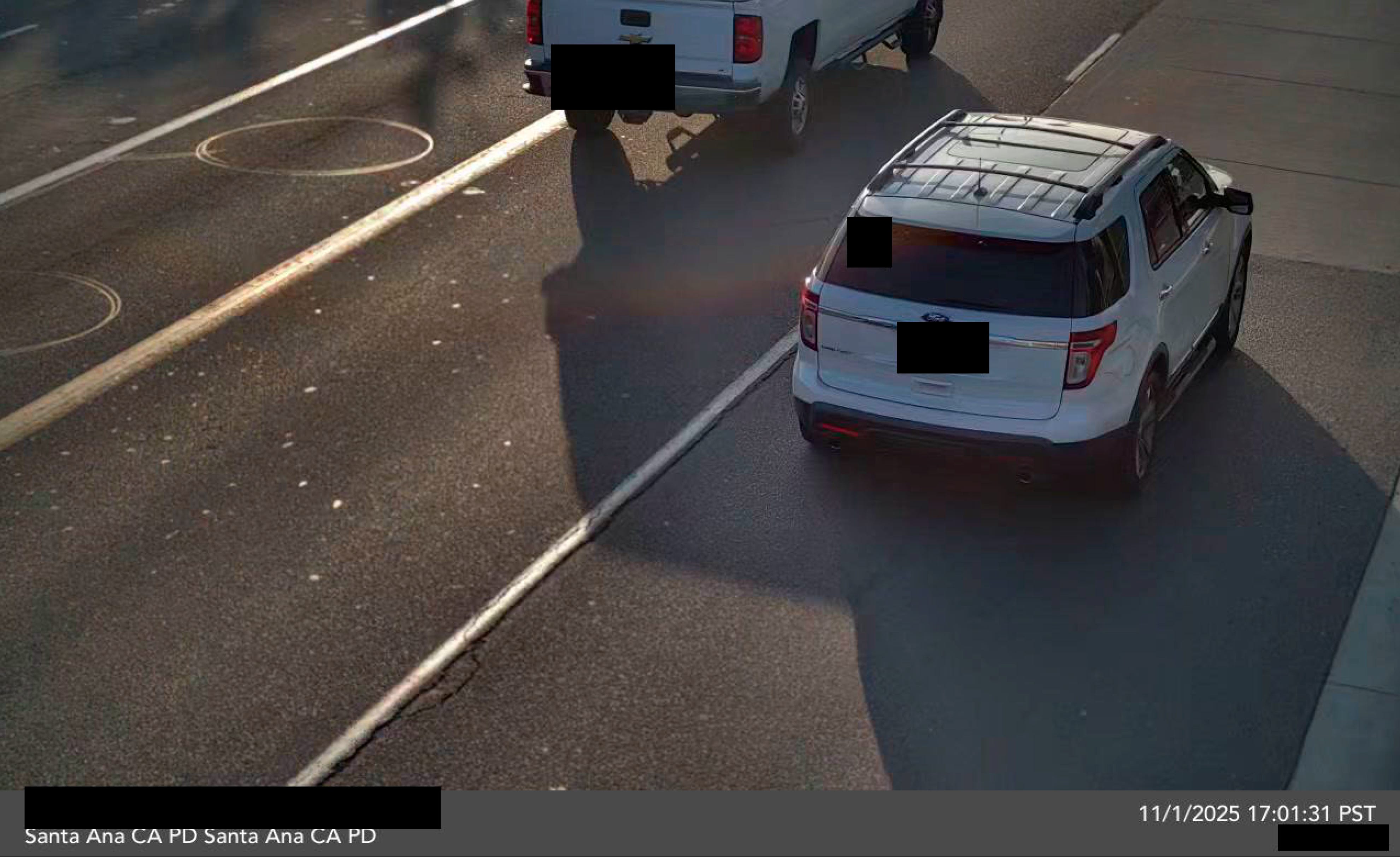
Santa Ana officials can’t figure out how to retrieve data captured by Flock’s automated license plate reader (ALPR) system installed last year. Through letters sent to Inadvertent’s counsel, the city attorney’s office revealed that even just one day’s worth of data, which contains tens of thousands of images of Santa Ana residents driving, with location information, a timestamp, and other identifying features, is apparently out of reach to the city and as a result of that, the public. In the letters, the city initially refused to give up information on where they installed the ALPR cameras, despite the cameras being in plain view around the city and fixed onto public infrastructure. However, in a complete reversal last week, the city published a list of intersections where the cameras were installed. This all stems from multiple public records requests seeking information about how the Santa Ana Police Department (SAPD) is using the mass surveillance systems on residents.
In ongoing correspondence, city officials have shifted positions to keep hidden critical information about the ALPR systems. SAPD’s request denials show that Investigations Bureau Commander Gilbert Hernandez is the person responsible for withholding the information. Records previously released show Hernandez helped usher the Flock system into the city, oversaw the installation of the cameras with the public works department and is the point person for the department’s ALPR program. In Hernandez’s initial denial of Flock data, he issued a blanket denial, failing to recognize a California Supreme Court ruling stating that ALPR data is a disclosable public record. It is unclear whether he consulted an attorney when making the determination and the city has previously refused to disclose what the role of the city attorney’s office is when the city makes determinations on public records requests.
After the blanket denial, the city said that Flock’s system is incapable of retrieving images it captures – which makes the city incapable of producing the records it’s obligated to produce. At the same time, Flock’s website contains instructions for its customers who need to retrieve data from its servers. The city attorney’s office and SAPD made no mention of these instructions at first and it’s unclear if they were aware of them.
Inadvertent also requested the locations of the cameras. As of last week, the city published the locations where they installed the systems on the street. This fully walked back every reason they previously gave for denying to give that exact information. After Hernandez withheld the information, citing an intelligence or security protocol exemption, the city later said the reason they did not want to share it was because “potential suspects” could avoid the cameras. Weston Rowland, Inadvertent’s attorney, then explained to the city that this reason failed to justify legally withholding the location information. Santa Ana officials then said that the city is considering “rolling out a program similar to the City of Costa Mesa,” which contains a list of camera locations and links to a page on Flock’s website listing how Costa Mesa uses the system and who they share data with.
SAPD Public Information Officer Natalie Garcia said, “The Chief initiated the ALPR transparency page to keep the community informed and increase transparency.”
Beyond the location information, the letters from Rowland forced the city to produce two redacted images taken on an ALPR system. The images show a full street scene, not just a license plate. They illustrate the powerful nature of ALPR systems, which mass-collect data on any person who comes across them. Travel direction, bumper stickers, location, anything in plain sight, are captured and then stored on Flock and Motorola’s databases for one year and five years, respectively. In aggregate, the data captured by the systems provide a near-complete portrait of someone’s life: where they may work, where they may drop their kids off, who they see, where they park at night – all centralized and available to any police or government agency with access to the databases.
All of this data is also being used to train Flock’s artificial intelligence (AI), according to reporting by WIRED. The reporting states that Flock’s AI detects license plates, vehicles and people automatically, including what clothes they wear. It goes on to state, “...a Flock patent also mentions cameras detecting ‘race’.”
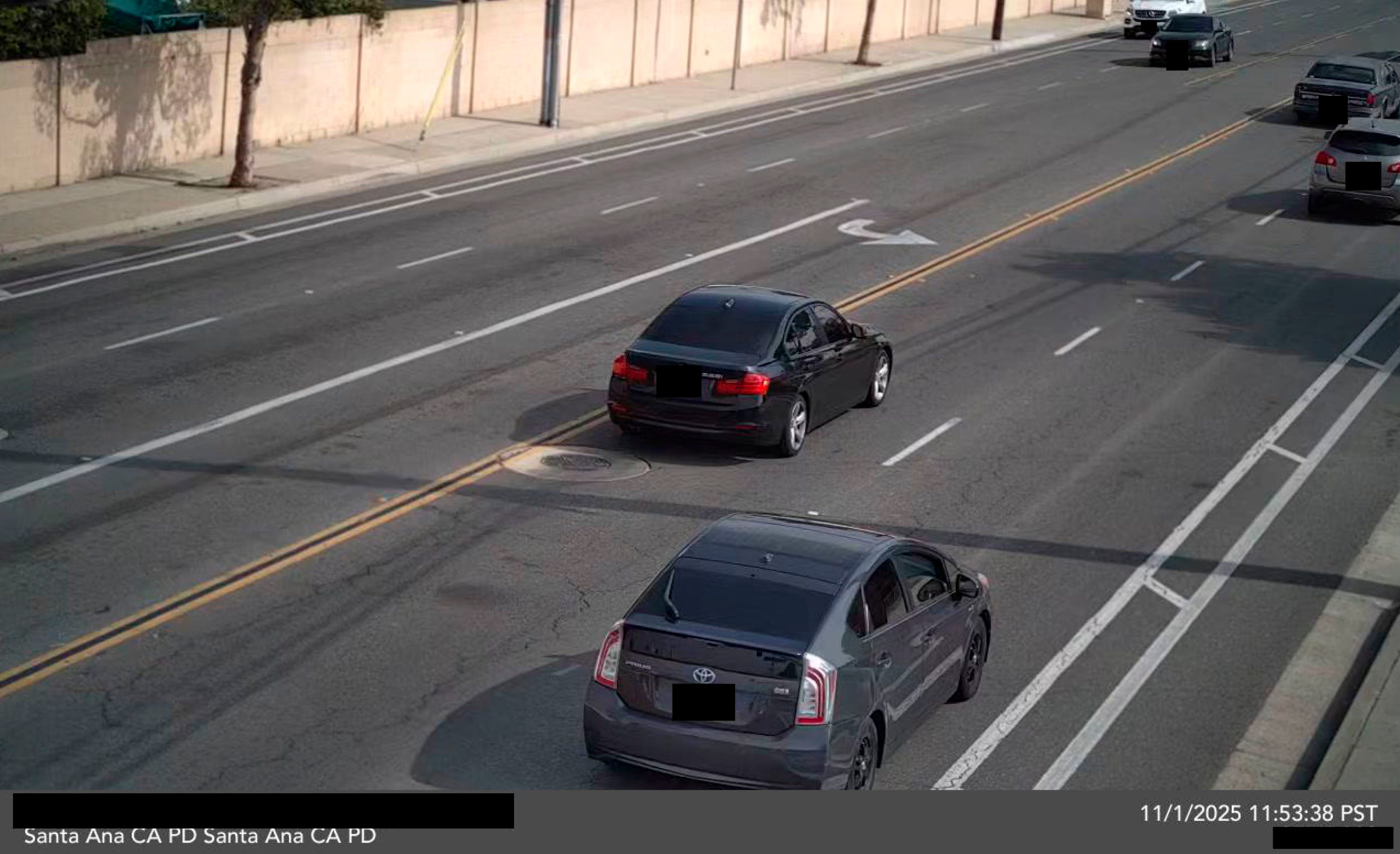
The withholding of information is nothing new for the city, neither is paying taxpayer money for improperly withholding disclosable public records, yet the arguments they present, according to Rowland’s letters, are legally insufficient and could result in a lawsuit.
Cities across the US are canceling their contracts, and advocates in Santa Ana are also organizing to reach the same outcome in the city. Tanya Navarro, Organizing Director at Chispa said, “The only way to ensure this data is not abused or misused is to not collect it in the first place…at least 30 localities have deactivated their Flock cameras or ended their Flock contracts in an effort to protect their residents from predatory data sharing. We should be next.”
Last year, reporting from CalMatters revealed that the Los Angeles Police Department (LAPD) and the Orange County Sheriff’s Department were illegally sharing their Flock data with Immigration and Customs Enforcement (ICE). SAPD and Santa Ana city officials have said that the city is not engaging in the same illegal practice.
Edit 3/16/2026, 1:52PM: The second image was changed due to a screenshot error. A word in the first paragraph was removed to make a sentence more concise. No substantial changes.